A few followers have asked for tips on writing romance into their stories or as the basis of their stories. Here’s a masterlist of sources that may help [UPDATED].
Because, duh, why don’t I have more intercultural links, I the indolent offspring of an intercultural marriage? Actually weren’t that easy to find and I still had to pick and choose, so maybe I should try writing some of my own…
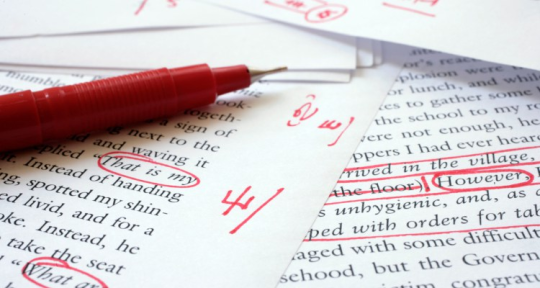
When I send out my chapter to be read over by my beta readers, I always include a set of questions typed out at the bottom, grouped into different categories such as: plot, pacing, character, setting, etc.
You might want to tailor the questions depending on the genre or which chapter it is. For example, if it’s the first chapter you’ll want to ask them about how well your story managed to hook them, or if they managed to easily get an idea of the world you’ve introduced them to. If it’s the climax you might want to ask if the action scenes are fluid, and if the plot twist/s were predictable or surprising.
Here’s some example questions that you could use:
Opening Chapter:
What is your first impression of the main character? Do you find them likable? Annoying? Boring?
After reading it for the first time, what is your first impression? Was it cohesive and compelling? Boring and confusing?
Did the first sentence/paragraph/page efficiently grab your attention and hook you in?
If you were to read this chapter in a bookstore/library would you be convinced to buy it? Or would you need to read further before deciding? Why or why not?
Did you get oriented fairly quickly at the beginning as to whose story it is, what’s going on, and where and when it’s taking place? If not, what were you confused about at the beginning?
Does the first chapter establish the main character efficiently? Do they feel believable?
Characters:
Could you clearly imagine what the characters looked like? If not, who?
Who was your favourite character and why? Has your favourite character changed? (if this hasn’t changed feel free to skip this question)
Are there any characters that you do not like? Why do you not like them? (Boring, annoying, problematic, etc.)
Was there ever a moment when you found yourself annoyed or frustrated by a character?
Could you relate to the main character? Did you empathise with their motivation or find yourself indifferent?
Were the characters goals/motivations clear and understandable?
Did you get confused about who’s who? Are there too many characters to keep track of? Are any of the names or characters too similar?
Do the characters feel three-dimensional or like cardboard cutouts?
How familiar have you become with the main characters? Without cheating could you name the four main characters? Can you remember their appearance? Can you remember their goal or motivation?
Dialogue:
Did the dialogue seem natural to you?
Was there ever a moment where you didn’t know who was talking?
Setting/world-building:
Were you able to visualize where and when the story is taking place?
Is the setting realistic and believable?
How well do you remember the setting? Without cheating, can you name four important settings?
Genre:
Did anything about the story seem cliche or tired to you? How so?
Did anything you read (character, setting, etc.) remind you of any others works? (Books, movies, etc.)
Plot/pacing/scenes:
Do you feel there were any unnecessary scenes/moments that deserved to be deleted or cut back?
Do the scenes flow naturally and comprehensively at an appropriate pace? Did you ever feel like they were jumping around the place?
Was there ever a moment where you attention started to lag, or the chapter begun to drag? Particular paragraph numbers would be very helpful.
Did you ever come across a sentence that took you out of the moment, or you had to reread to understand fully?
Was the writing style fluid and easy to read? Stilted? Purple prose-y? Awkward?
Did you notice any discrepancies or inconsistencies in facts, places, character details, plot, etc.?
Additional questions:
What three things did you like? What three things did you not like?
Can you try predicting any upcoming plot twists or outcomes?
Was there ever a moment when your suspension of disbelief was tested?
Is there anything you’d personally change about the story?
Was the twist expected or surprising? Do you feel that the foreshadowing was almost nonexistent, or heavy handed?
Feel free to tailor these to your needs or ignore some of them if you don’t think they’re useful. Basically, your questions are about finding out the information about how others perceive your own writing and how you can improve your story.
Person A: You know… the thing Person B: The “thing”? Person A: Yeah, the thing with the little-! *mutters under their breath* Como es que se llama esa mierda… THE FISHING ROD
As someone with multiple bilingual friends where English is not the first language, may I present to you a list of actual incidents I have witnessed:
Forgot a word in Spanish, while speaking Spanish to me, but remembered it in English. Became weirdly quiet as they seemed to lose their entire sense of identity.
Used a literal translation of a Russian idiomatic expression while speaking English. He actually does this quite regularly, because he somehow genuinely forgets which idioms belong to which language. It usually takes a minute of everyone staring at him in confused silence before he says “….Ah….. that must be a Russian one then….”
Had to count backwards for something. Could not count backwards in English. Counted backwards in French under her breath until she got to the number she needed, and then translated it into English.
Meant to inform her (French) parents that bread in America is baked with a lot of preservatives. Her brain was still halfway in English Mode so she used the word “préservatifes.” Ended up shocking her parents with the knowledge that apparently, bread in America is full of condoms.
Defined a slang term for me……. with another slang term. In the same language. Which I do not speak.
Was talking to both me and his mother in English when his mother had to revert to Russian to ask him a question about a word. He said “I don’t know” and turned to me and asked “Is there an English equivalent for Нумизматический?” and it took him a solid minute to realize there was no way I would be able to answer that. Meanwhile his mom quietly chuckled behind his back.
Said an expression in English but with Spanish grammar, which turned “How stressful!” into “What stressing!”
Bilingual characters are great but if you’re going to use a linguistic blunder, you have to really understand what they actually blunder over. And it’s usually 10x funnier than “Ooops it’s hard to switch back.”
D: deceitful, defeating, delusional, demanding, denial, deranged, destructive, directed by externals, directionless, disagreeable, discourteous, dishonest, disorganized, disrespectful, dissatisfied, distant, does everything by the book, does what is convenient, doesn’t listen, doesn’t think things through, dogmatic, dominating, domineering, doubtful, dour, downer, draconian, drags people down, drama queen, drinker, drugs, dull, dysfunctional
PLEASE DO NOT THROW THE YA GENRE UNDER THE BUS it is filled with diversity that goes far beyond whatever makes it to the movies! Please give it a chance!
Sticking a landing will royally fuck up your joints and possibly shatter your ankles, depending on how high you’re jumping/falling from. There’s a very good reason free-runners dive and roll.
Hand-to-hand fights usually only last a matter of seconds, sometimes a few minutes. It’s exhausting work and unless you have a lot of training and history with hand-to-hand combat, you’re going to tire out really fast.
Arrows are very effective and you can’t just yank them out without doing a lot of damage. Most of the time the head of the arrow will break off inside the body if you try pulling it out, and arrows are built to pierce deep. An arrow wound demands medical attention.
Throwing your opponent across the room is really not all that smart. You’re giving them the chance to get up and run away. Unless you’re trying to put distance between you so you can shoot them or something, don’t throw them.
Everyone has something called a “flinch response” when they fight. This is pretty much the brain’s way of telling you “get the fuck out of here or we’re gonna die.” Experienced fighters have trained to suppress this. Think about how long your character has been fighting. A character in a fist fight for the first time is going to take a few hits before their survival instinct kicks in and they start hitting back. A character in a fist fight for the eighth time that week is going to respond a little differently.
ADRENALINE WORKS AGAINST YOU WHEN YOU FIGHT. THIS IS IMPORTANT. A lot of times people think that adrenaline will kick in and give you some badass fighting skills, but it’s actually the opposite. Adrenaline is what tires you out in a battle and it also affects the fighter’s efficacy – meaning it makes them shaky and inaccurate, and overall they lose about 60% of their fighting skill because their brain is focusing on not dying. Adrenaline keeps you alive, it doesn’t give you the skill to pull off a perfect roundhouse kick to the opponent’s face.
Swords WILL bend or break if you hit something hard enough. They also dull easily and take a lot of maintenance. In reality, someone who fights with a sword would have to have to repair or replace it constantly.
Fights get messy. There’s blood and sweat everywhere, and that will make it hard to hold your weapon or get a good grip on someone.
A serious battle also smells horrible. There’s lots of sweat, but also the smell of urine and feces. After someone dies, their bowels and bladder empty. There might also be some questionable things on the ground which can be very psychologically traumatizing. Remember to think about all of the character’s senses when they’re in a fight. Everything WILL affect them in some way.
If your sword is sharpened down to a fine edge, the rest of the blade can’t go through the cut you make. You’ll just end up putting a tiny, shallow scratch in the surface of whatever you strike, and you could probably break your sword.
ARCHERS ARE STRONG TOO. Have you ever drawn a bow? It takes a lot of strength, especially when you’re shooting a bow with a higher draw weight. Draw weight basically means “the amount of force you have to use to pull this sucker back enough to fire it.” To give you an idea of how that works, here’s a helpful link to tell you about finding bow sizes and draw weights for your characters. (CLICK ME)
If an archer has to use a bow they’re not used to, it will probably throw them off a little until they’ve done a few practice shots with it and figured out its draw weight and stability.
People bleed. If they get punched in the face, they’ll probably get a bloody nose. If they get stabbed or cut somehow, they’ll bleed accordingly. And if they’ve been fighting for a while, they’ve got a LOT of blood rushing around to provide them with oxygen. They’re going to bleed a lot.
Here’s a link to a chart to show you how much blood a person can lose without dying. (CLICK ME)
If you want a more in-depth medical chart, try this one. (CLICK ME)
Hopefully this helps someone out there. If you reblog, feel free to add more tips for writers or correct anything I’ve gotten wrong here.
How to apply Writing techniques for action scenes:
– Short sentences. Choppy. One action, then another. When there’s a lull in the fight, take a moment, using longer phrases to analyze the situation–then dive back in. Snap, snap, snap. – Same thing with words – short, simple, and strong in the thick of battle. Save the longer syllables for elsewhere. – Characters do not dwell on things when they are in the heat of the moment. They will get punched in the face. Focus on actions, not thoughts. – Go back and cut out as many adverbs as possible. – No seriously, if there’s ever a time to use the strongest verbs in your vocabulary – Bellow, thrash, heave, shriek, snarl, splinter, bolt, hurtle, crumble, shatter, charge, raze – it’s now. – Don’t forget your other senses. People might not even be sure what they saw during a fight, but they always know how they felt. – Taste: Dry mouth, salt from sweat, copper tang from blood, etc – Smell: OP nailed it – Touch: Headache, sore muscles, tense muscles, exhaustion, blood pounding. Bruised knuckles/bowstring fingers. Injuries that ache and pulse, sting and flare white hot with pain. – Pain will stay with a character. Even if it’s minor. – Sound and sight might blur or sharpen depending on the character and their experience/exhaustion. Colors and quick movements will catch the eye. Loud sounds or noises from behind may serve as a fighter’s only alert before an attack. – If something unexpected happens, shifting the character’s whole attention to that thing will shift the Audience’s attention, too. – Aftermath. This is where the details resurface, the characters pick up things they cast aside during the fight, both literally and metaphorically. Fights are chaotic, fast paced, and self-centered. Characters know only their self, their goals, what’s in their way, and the quickest way around those threats. The aftermath is when people can regain their emotions, their relationships, their rationality/introspection, and anything else they couldn’t afford to think or feel while their lives were on the line.
Do everything you can to keep the fight here and now. Maximize the physical, minimize the theoretical. Keep things immediate – no theories or what ifs.
If writing a strategist, who needs to think ahead, try this: keep strategy to before-and-after fights. Lay out plans in calm periods, try to guess what enemies are thinking or what they will do. During combat, however, the character should think about his options, enemies, and terrain in immediate terms; that is, in shapes and direction. (Large enemy rushing me; dive left, circle around / Scaffolding on fire, pool below me / two foes helping each other, separate them.)
Lastly, after writing, read it aloud. Anyplace your tongue catches up on a fast moving scene, edit. Smooth action scenes rarely come on the first try.
More for martial arts or hand-to-hand in general
What a character’s wearing will affect how they fight. The more restricting the clothes, the harder it will be. If they’re wearing a skirt that is loose enough to fight in, modesty will be lost in a life or death situation.
Jewelry can also be very bad. Necklaces can be grabbed onto. Bracelets also can be grabbed onto or inhibit movement. Rings it can depend on the person.
Shoes also matter. Tennis shoes are good and solid, but if you’re unused to them there’s a chance of accidentally hurting your ankle. High heels can definitely be a problem. However, they can also make very good weapons, especially for someone used to balancing on the balls of their feet. Side kicks and thrusting kicks in soft areas (like the solar plexus) or the feet are good ideas. They can also (hopefully) be taken off quickly and used as a hand weapon. Combat boots are great but if someone relies more on speed or aren’t used to them, they can weigh a person down. Cowboy boots can be surprisingly good. Spin kicks (if a character is quick enough to use them) are especially nasty in these shoes.
If a character is going to fight barefoot, please keep location in mind. Concrete can mess up your feet quick. Lawns, yards, etc often have hidden holes and other obstacles that can mess up a fighter. Tile floors or waxed wood can be very slippery if you’re not careful or used to them.
Likewise, if it’s outside be aware of how weather will affect the fight. The sun’s glare can really impede a fighter’s sight. A wet location, inside or outside, can cause a fighter to slip and fall. Sweat on the body can cause a fighter to lose a grip on an opponent too.
Pressure points for a trained fighter are great places to aim for in a fight. The solar plexus is another great place to aim for. It will knock the wind out of anyone and immediately weaken your opponent.
It your character is hit in the solar plexus and isn’t trained, they’re going down. The first time you get hit there you are out of breath and most people double over in confusion and pain. If a fighter is more used to it, they will stand tall and expand themselves in order to get some breath. They will likely keep fighting, but until their breath returns to normal, they will be considerably weaker.
Do not be afraid to have your character use obstacles in their environment. Pillars, boxes, bookshelves, doors, etc. They put distance between you and an opponent which can allow you to catch your breath.
Do not be afraid to have your character use objects in their environment. Someone’s coming at you with a spear, trident, etc, then pick up a chair and get it caught in the legs or use it as a shield. Bedsheets can make a good distraction and tangle someone up. Someone’s invading your home and you need to defend yourself? Throw a lamp. Anything can be turned into a weapon.
Guns often miss their targets at longer distances, even by those who have trained heavily with them. They can also be easier to disarm as they only shoot in one direction. However, depending on the type, grabbing onto the top is a very very bad idea. There is a good likelihood you WILL get hurt.
Knives are nasty weapons by someone who knows what they’re doing. Good fighters never hold a knife the way you would when cutting food. It is best used when held against the forearm. In defense, this makes a block more effective and in offense, slashing movement from any direction are going to be bad. If a character is in a fight with a knife or trying to disarm one, they will get hurt.
Soft areas hit with hard body parts. Hard areas hit with soft body parts. The neck, stomach, and other soft areas are best hit with punches, side kicks, elbows, and other hard body parts. Head and other hard parts are best hit using a knife hand, palm strike, etc. Spin kicks will be nasty regardless of what you’re aiming for it they land.
Common misconception with round house kicks is that you’re hitting with the top of the foot. You’re hitting with the ball. You’re likely to break your foot when hitting with the top.
When punching, the thumb is outside of the fist. You’ll break something if you’re hitting with the thumb inside, which a lot of inexperienced fighters do.
Also, punching the face or jaw can hurt.
It can be hard to grab a punch if you’re not experienced with it despite how easy movies make it seem. It’s best to dodge or redirect it.
Hitting to the head is not always the best idea. It can take a bit of training to be able to reach for the head with a kick because of the height. Flexibility is very much needed. If there are problems with their hips or they just aren’t very flexible, kicks to the head aren’t happening.
Jump kicks are a good way to hit the head, but an opponent will see it coming if it’s too slow or they are fast/experienced.
A good kick can throw an opponent back or knock them to the ground. If the person you’ve hit has experience though, they’ll immediately be getting up again.
Even if they’ve trained for years in a martial art, if they haven’t actually hit anything before or gotten hit, it will be slightly stunning for the person. It does not feel the way you expect it too.
Those yells in martial arts are not just for show. If done right, they tighten your core making it easier to take a hit in that area. Also, they can be used to intimidate an opponent. Yelling or screaming right by their ear can startle someone. (Generally, KHR fans look at Squalo for yelling)
Biting can also be used if someone’s grabbing you. Spitting in someone’s eyes can’t hurt. Also, in a chokehold or if someone is trying to grab your neck in general, PUT YOU CHIN DOWN. This cuts off access and if they’re grabbing in the front can dig into their hand and hurt.
Wrist grabs and other grabs can be good. Especially if it’s the first move an opponent makes and the character is trained, there are simple ways to counter that will have a person on their knees in seconds..
Use what your character has to their advantage. If they’re smaller or have less mass, then they’ll be relying on speed, intelligence, evasion, and other similar tactics. Larger opponents will be able to take hits better, they’re hits may be slower depending on who it is but will hurt like hell if they land, and size can be intimidating. Taller people with longer legs will want to rely on kicking and keeping their distance since they have the advantage there. Shorter people will want to keep the distance closer where it’s easier for them but harder for a taller opponent. Punching is a good idea.
Using a person’s momentum against them is great. There’s martial arts that revolve around this whole concept. They throw a punch? Grab it and pull them forward and around. Their momentum will keep them going and knock them off balance.
Leverage can used in the same way. If used right, you can flip a person, dislocate a shoulder, throw out a knee, etc.
One note on adrenaline: All that was said above is true about it. But, in a fight, it can also make you more aware of what’s going on. A fight that lasts twenty seconds can feel like a minute because time seems to almost slow down while moving extremely rapidly. You only have so much time to think about what you’re doing. You’re taking in information constantly and trying to adjust. Even in the slow down adrenaline gives you, everything is moving very rapidly.
Feelings will be your downfall even more so than adrenaline. Adrenaline can make those feelings more intense, but a good fighter has learned not to listen to those feelings. A good fighter may feel anger at being knocked down or in some way humiliated – their pride taken down. Yet they will not act on the anger. Acting on it makes a fighter more instinctive and many will charge without thinking. Losing control of anything (adrenaline rush, emotions, technique, etc) can be a terrible thing in a fight.



 senpaimutual


